

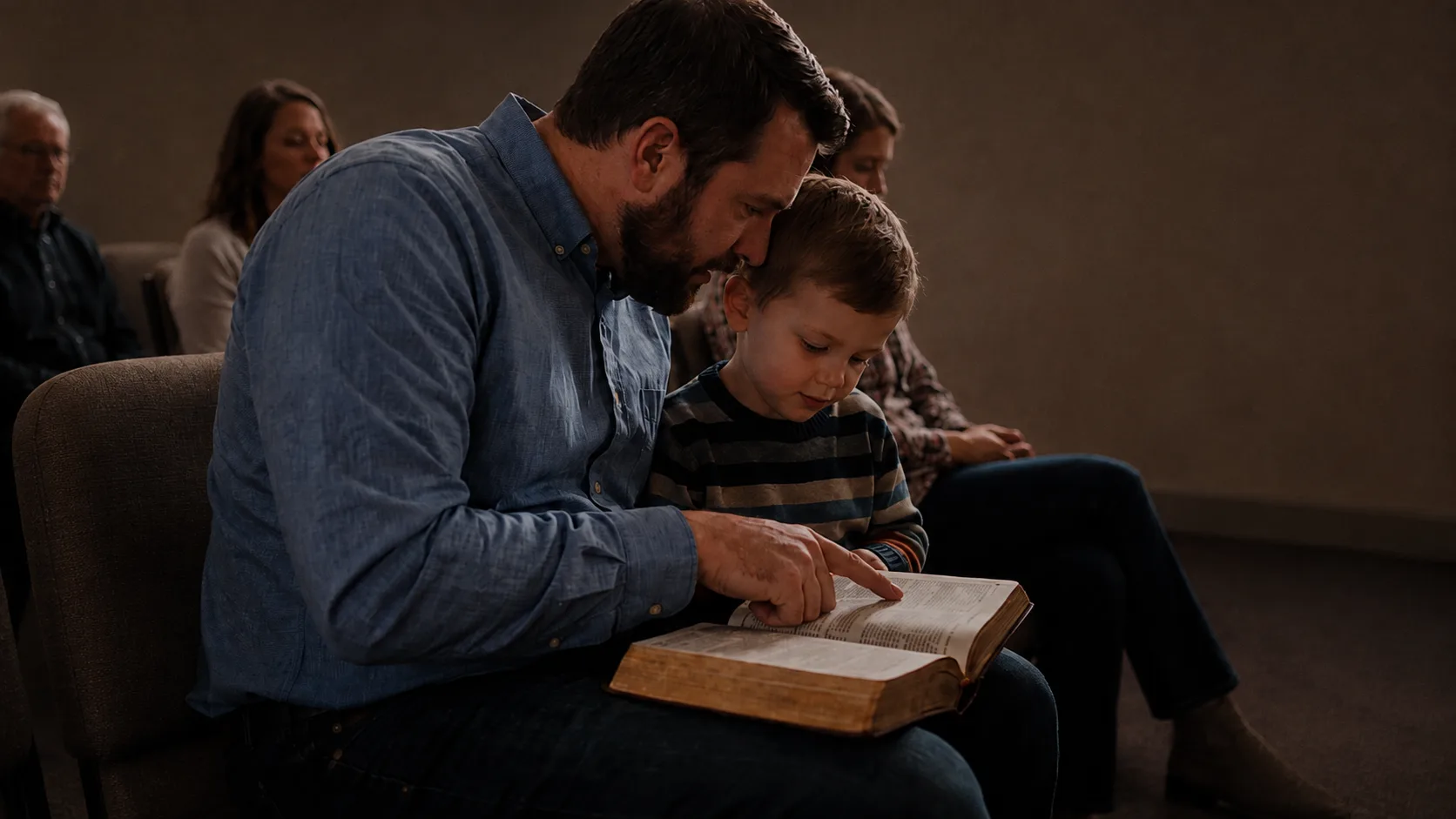
Beginning Sunday, August 2, and continuing through Sunday, September 6, we will have what we call All-Church Gatherings, where children in first grade and above gather with the rest of the church in our Sunday worship services. We will provide activities each week to help kids participate in the service. Our regular elementary and middle school Sunday programming will resume September 13. I want to explain briefly why we do this and invite you to participate with us. There are four big reasons.
1. It is helpful for our ministry teams.
August is a month when many families travel, which means attendance in children’s classes can fluctuate considerably. It can also make staffing our classrooms more complicated than usual. Taking a break from elementary and middle school programming gives our staff and volunteers an opportunity to rest and prepare to begin the fall at a high level. We are blessed with many excellent volunteers who serve our kids and students faithfully throughout the year, and we want to care for them well.
We realize that a similar break could certainly benefit our preschool volunteers, but we also recognize that preschool-aged children generally have a more difficult time participating in an entire worship service. We are especially grateful for the leaders who continue serving our preschoolers during these weeks!
2. It contributes to the faith formation of children.
At Highlands, we believe in creating age-specific environments where kids and students can have fun, encounter biblical teaching, and build relationships in ways designed for their stage of life. That is why we invest so much energy in these ministries throughout the year.
At the same time, we also believe in integrating kids and students into the life of the church. Children need opportunities to worship alongside the whole church.
Of course, there are challenges to bringing children into the worship gathering.
-
- Are parts of our services going to be over a child’s head? Sure.
-
- Is it difficult for a child to pay attention throughout a forty-ish-minute sermon? Sure.
-
- Could their learning style and attention span be more readily engaged in an environment specifically designed for their age? Sure.
But learning information is not the only way faith is formed. So much of the Christian life is learned through fellowship, observation, and shared experience. When children gather with the whole church, they experience something that cannot be fully reproduced in a classroom.
They see that the church is a community of different kinds of people who have been brought together by the gospel. They see people of different ages and stages singing to the same God, listening to the same Bible, receiving the same bread and cup, and praying for one another.
They may not understand or remember everything they sing or hear in the sermon. (Then again, who does?) But they are learning something else:
-
- These people believe in God.
-
- These people sing about Him.
-
- These people want to hear from the Bible.
-
- These people are different from one another, but they seem to love one another.
-
- This is what it looks like for the church to worship.
These experiences plant seeds that matter deeply in the long-term development of a person’s faith.
Without opportunities like these, children may begin to assume that church is primarily designed for people just like them — that children belong “downstairs,” adults belong “upstairs,” and everyone should have a space specifically tailored to them. But the church is a community of different people brought together through our shared faith in Jesus. Children need opportunities to experience that community for themselves.
3. It encourages parents to model worship for their children.
Children learn not only by watching the church as a whole, but also by watching their parents.
Fathers and mothers, it is just as important for your children to see you worshiping, praying, greeting people, opening your Bible, listening to the sermon, and thinking seriously about your life with Jesus as it is for them to receive age-appropriate biblical teaching.
Even when they are bored or fidgety while sitting beside you, they are watching. They are learning. They are experiencing something that can plant eternal seeds as they observe you taking your faith seriously.
My earliest memories of church are not primarily of something I learned from a Sunday school teacher or the preacher in “big church.” I remember my dad having his Bible open and paying full attention. He sang loudly — sometimes tearfully and sometimes with his hands raised. (I wondered, why is he doing that?) He also cared that I had my Bible open. He believed that God speaks to his people through his Word as it is read, preached, and sung, and he fully expected that his God would speak to me and become my God as well.
So parents, let’s be intentional to model a life of worship for our children! The church is here to help us, encourage us, and come alongside us, but it cannot play our unique role for us.
That does not mean you need to create the perfect family or have perfectly behaved children. Every family is affected by sin and desperately needs the grace of Christ. The goal is not to produce children who never fidget or embarrass you in church. The goal is for you to model a life of sincere, though flawed, worship to God because of the grace you’ve received from Him.
These weeks are an intentional opportunity to do that.
4. It is good for adults to welcome children into the gathering.
Children benefit from worshiping with adults, but adults also benefit from worshiping with children.
-
- Will some children move around or make noises that distract us? Sure.
-
- Will some awkwardly avoid eye contact when we try to talk with them? Probably.
-
- Will some occasionally cross the line from cute and childish into disrespectful or irreverent? Sure.
But all of that can be very good for us.
Jesus said, “Let the little children come to me. Don’t stop them, because the kingdom of God belongs to such as these.” — Mark 10:14
Let’s be a church that makes room for children. Let’s be a church that loves people who are different from us, responds graciously to quirks and distractions, and finds joy as people encounter the presence of God.
This is part of what it means for Future Generations to be one of our core values. We want today’s children to find and follow Jesus, grow into faithful members of a local church, be courageous witnesses for Christ, and one day pass the same ancient faith to their children and grandchildren.
That work begins now —as parents plant gospel seeds through their words and their lives… as older believers learn children’s names, encourage them, and make room for them… as children watch the whole church worship and love one another.
Let’s Worship Together!
During these six weeks, there may be a little more movement, noise, and distraction in the room. Parents, you do not need to feel embarrassed or pressured to keep your children perfectly still. We are good with it!
Thank you for being a church that loves future generations by investing in kids and student ministries, welcoming children, and encouraging parents. Let’s receive these weeks as an opportunity to practice being the whole church together.
This is one small but meaningful way we pass down the ancient faith to future generations.